-
 +86-13819988181
-
 sales@bodehardware.com

 English
 English
 中文简体
中文简体 Español
Is Adjustable Metal Rack Better Than Fixed Shelving
2026-04-24
Many homeowners, workshop owners, and garage organizers often face a key decision when improving their storage systems: should they choose an adjustable metal rack system or stick with fixed shelving? Questions about flexibility, long-term usefulness, and performance come up repeatedly on search engines and forums — especially when people start planning garage storage racks or metal shelving solutions that will serve them for years.
What Users Are Really Asking
Across online discussions and product reviews, a few core concerns emerge:
Can shelving change with storage needs over time?
Does fixed shelving really offer more stability?
Is price the main determinant, or do performance and durability matter more?
These questions reflect the practical dilemmas faced by anyone organizing a busy garage space. Research shows that selecting the appropriate solution depends largely on how the storage will be used and what items will be stored more frequently.
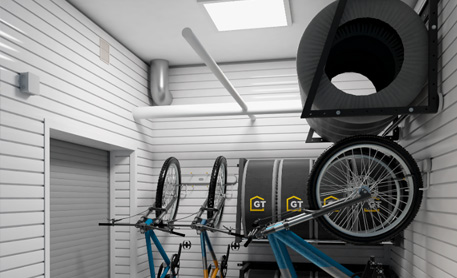
Adjustable Metal Rack: Flexibility and Customization
An adjustable metal rack essentially allows shelf heights and positions to be changed easily after assembly. The key advantages often discussed in homeowner forums include:
Adaptable Storage Heights
One of the biggest benefits of an adjustable system is that you can tailor the shelf spacing to a variety of item sizes — from tall gas cans to compact bins. Users who regularly change what they store find this especially valuable because their storage layout keeps pace with their changing needs rather than forcing them to re-buy or re-assemble systems.
Better Space Utilization
Instead of sliding bulky items past fixed shelves, adjustable racks let you shift shelves to consume vertical space more intelligently. That means fewer wasted gaps and more efficient storage. Many customizable systems recommend keeping heavier items on lower levels, while lighter bins can go higher — improving safety and access.
Adjustable metal racks also tend to pair better with other organization tools — such as stackable bins, label holders, and slide-in drawers — because the shelving grid supports modular layouts rather than rigid fixed intervals.
Fixed Shelving: Simplicity and Strength
Fixed shelving is constructed with permanently attached shelves. These units are often designed with a straightforward top-to-bottom structure, which can offer:
Immediate structural rigidity
Because shelves aren’t designed to move, the entire frame can sometimes be more robust in handling certain loads, especially where precise positioning isn’t required.
Lower initial cost
For basic garage storage needs where flexibility isn’t necessary, fixed shelves are usually simpler and less expensive — an appealing factor for users organizing a small workspace or storing items of uniform size.
However, many sources report that fixed shelving becomes a limitation when users accumulate seasonal gear, change tool collections, or reorganize storage zones. Once ideal shelving can quickly feel confining, causing users to modify or replace the entire unit later.
Materials and Environment Considerations
Whether adjustable or fixed, material quality matters for metal shelving solutions. Garage environments are not climate-controlled; humidity, temperature swings, and contact with automotive chemicals can accelerate corrosion and weaken inferior shelves over time.
That’s why many professionals recommend powder-coated or galvanized steel finishes. At Jinhua Bode Hardware Technology Co., Ltd., our adjustable metal rack designs use corrosion-resistant coatings that improve long-term durability, while reinforced connectors ensure that shifting shelves don’t compromise overall integrity..
Real-World Decisions: What Matters Most
A key takeaway from forum threads and product Q&As is that flexibility often yields greater satisfaction over time. Users who frequently reorganize, store odd-sized gear, or anticipate future changes consistently mention that adjustable systems better support evolving needs. Forums highlight that while fixed shelving may work initially for basic bins or storage boxes, adaptability becomes crucial when tool collections, sports gear, or seasonal equipment expands.

Bode specializes in high-quality, multifunctional metal shelving solutions. We manufacture durable metal shelves designed to optimize warehouse organization. We are committed to providing our customers with affordable, reliable products while supporting a cleaner and more sustainable environment.
Ready to work with us?

-
Tel
+86-13819988181
-
E-mail
sales@bodehardware.com
Product Links
Quick Links
Contact Us
Copyright © Jinhua Bode Hardware Technology Co., Ltd. All Rights Reserved.

China Garage Storage Racks